


Should I choose a natural or lab-created diamond?

Updated: Aug 4

Choosing the perfect diamond is one of the biggest decisions you'll make when shopping for an engagement ring, wedding band or fine jewelry. One of the first questions many shoppers ask is, "Should I buy a natural diamond or a lab-created diamond?" The answer depends entirely on your priorities, budget and personal preferences.
Many people land on our website after searching for things like "natural vs. lab-created diamonds," "which is better, natural or lab-grown diamonds," "are lab-created diamonds real," or "should I buy a mined or lab-grown diamond?" That's because these are some of the most common questions couples ask before making such an important purchase. At Williamsburg Jewelers, we believe the best diamond is the one that makes you feel excited every time you look at it.
Whether that's a rare natural diamond or a beautiful lab-created diamond, our experienced team will help you understand the differences so you can make a confident, informed decision.
Natural diamonds
A one-of-a-kind creation of nature
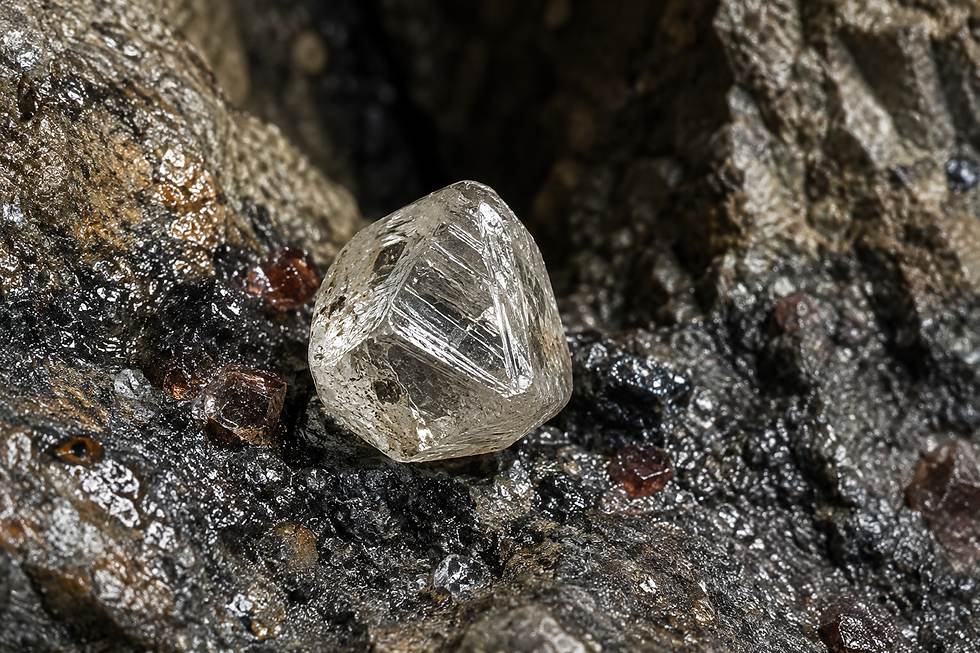
Natural diamonds begin their journey deep beneath the Earth's surface, where carbon is exposed to tremendous heat and pressure over billions of years. Volcanic activity eventually carries these gemstones closer to the surface, where they are discovered, mined, cut and polished into the dazzling diamonds we know today.
For many people, the story behind a natural diamond is part of its appeal. Every natural diamond is unique, formed by nature over an almost unimaginable span of time. Many couples appreciate the symbolism of giving a diamond that has existed long before human history.
Natural diamonds also tend to hold their value better over time because their supply is limited. While no diamond should be viewed primarily as an investment, many buyers appreciate the rarity and enduring demand associated with natural diamonds.
Why many people choose natural diamonds
Formed naturally over billions of years
Every diamond is unique
Extremely rare
Traditional choice for engagement rings
Often retains value better than lab-created diamonds
Rich history and emotional significance
Available in a wide variety of shapes, sizes and qualities
Lab-created diamonds
Real diamonds with modern technology

One of the biggest misconceptions is that lab-created diamonds are imitation stones. They are not.
A lab-created diamond is a real diamond with the same chemical composition, crystal structure, hardness and brilliance as a natural diamond. In fact, even trained jewelers cannot distinguish between the two without specialized gemological equipment.
Instead of forming underground, lab-created diamonds are grown in highly controlled laboratories using advanced technology that recreates the conditions under which natural diamonds develop.
The result is a genuine diamond that sparkles just like a natural diamond and can be certified by respected gemological laboratories.
For many shoppers, lab-created diamonds make it possible to purchase a significantly larger diamond or a higher color and clarity grade while staying within their budget.
Why many people choose lab-created diamonds
They are real diamonds
Same sparkle, brilliance and durability as natural diamonds
Often cost significantly less than natural diamonds
Allows buyers to purchase a larger center stone
Excellent option for maximizing quality within a budget
Available in virtually every popular shape
Natural diamonds vs. lab-created diamonds: What's the difference?
Although both types of diamonds are genuine, there are a few important distinctions that can help guide your decision.
ATTRIBUTE | NATURAL DIAMOND | LAB-CREATED DIAMOND |
Origin | Created by nature over billions of years beneath the Earth's surface. | Grown in a laboratory over several weeks using advanced technology. |
Appearance | To the naked eye, there is virtually no visible difference. Both exhibit the same brilliance, fire and sparkle that make diamonds so desirable. | |
Durability | Both natural and lab-created diamonds receive a 10 on the Mohs Hardness Scale, making them equally suitable for everyday wear in engagement rings, wedding rings, earrings, pendants and other fine jewelry. | |
Price | Can be more of an investment depending on characteristics such as clarity, color, cut and carat weight. | Costs substantially less than natural diamonds of comparable size and quality. This allows many shoppers to purchase a larger diamond or upgrade color and clarity while remaining within budget. |
Rarity | Finite and increasingly rare. | Can continue to be produced as technology advances. |
Which is better: Natural or lab-created diamonds?
The truth is that neither is objectively better—they simply appeal to different priorities. A natural diamond may be the better choice if you value rarity, tradition, geological history and long-term desirability.
A lab-created diamond may be ideal if your highest priority is maximizing size, quality and sparkle while staying within a specific budget. The right answer depends on what matters most to you.
Are lab-created diamonds fake?

Another common question is, "Are lab-grown diamonds fake?" The answer is no.
Lab-created diamonds are genuine diamonds—not cubic zirconia, moissanite or simulated stones. They have the same physical, chemical and optical characteristics as natural diamonds. The Federal Trade Commission recognizes lab-created diamonds as real diamonds, provided they are properly disclosed as laboratory-grown.
Are natural diamonds worth the extra cost?
Some buyers gladly invest in a natural diamond because they appreciate its rarity, history and emotional symbolism. Others prefer putting the savings from a lab-created diamond toward a larger center stone, an upgraded setting, matching wedding bands or even their honeymoon.
Neither approach is right or wrong.
It's simply about choosing the option that aligns with your priorities and budget.
Questions to ask before buying any diamond
Whether you're considering a natural diamond engagement ring or a lab-created diamond engagement ring, ask yourself:
What is my budget?
Is rarity important to me?
Would I rather have a larger diamond or a natural origin?
What size diamond fits my style?
Which shape do I love most?
What balance of cut, color, clarity and carat weight is right for me?
Am I shopping for an engagement ring, anniversary gift or everyday jewelry?
Answering these questions can help narrow your options and make the shopping experience much easier.
Why shop at Williamsburg Jewelers?
Choosing a diamond should feel exciting—not overwhelming.

At Williamsburg Jewelers, our experienced jewelry professionals take the time to explain the differences between natural and lab-created diamonds without sales pressure or confusing terminology. We'll answer your questions honestly, compare options side by side and help you find the diamond that perfectly fits your style, budget and priorities.
Whether you're shopping for a classic natural diamond engagement ring, a stunning lab-created diamond engagement ring, diamond earrings, diamond pendants or a custom-designed piece of fine jewelry, we're committed to helping you make a purchase you'll love for years to come.
Our goal isn't to convince you that one type of diamond is better than the other. It's to help you discover which diamond is the best choice for you.
Visit Williamsburg Jewelers
Whether you're searching for natural diamonds, lab-created diamonds, lab-grown diamond engagement rings, custom engagement rings, diamond wedding bands, fine diamond jewelry, or simply trying to decide "Should I buy a natural or lab-created diamond?", we'd love to help.
Visit Williamsburg Jewelers to compare both options in person, ask questions and receive expert guidance from a friendly team that puts your needs first. It's just one more reason Williamsburg Jewelers has earned its reputation as "Where Williamsburg Goes to Get Engaged."


Comments